


- About us
- Services
- E-Commerce Development
- White Label Marketing
- Digital Marketing
- Mobile App Development
- Other Services
-

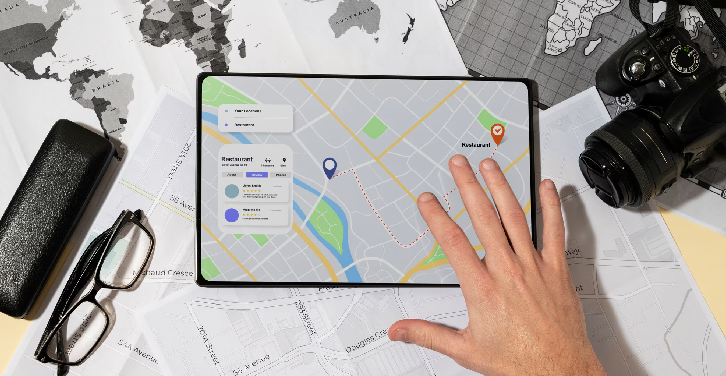
Getting your business to show up on Google Maps, especially in that top 3 spot, is a big deal for local businesses. Think about it, when someone searches for a service near them, those first few map results get a ton of attention. It’s not just about having a listing; it’s about making sure it’s the one people click on. This is where a solid google local map seo service comes into play, helping you get seen by the right people at the right time. We’re going to break down what that means and how you can make it happen for your business.
So, what exactly is this Google Map Pack everyone’s talking about? Basically, when you search for something on Google that has a local angle – like ‘plumber near me’ or ‘best pizza downtown’ – you’ll often see a special box pop up near the top of the search results. This box shows three local business listings, complete with a map. This is the Google Map Pack, also known as the local pack or the Google 3-pack. It’s not just a random selection; these are the businesses Google thinks are the most relevant, closest, and most prominent for that specific search.
Think of it as Google’s curated list of top local contenders. It’s a prime piece of digital real estate because it’s one of the first things people see, and it gets a ton of clicks.
Here’s a quick breakdown of what you’ll typically find in it:
Appearing in this pack is a big deal for local businesses. It means more visibility, more potential customers checking you out, and ultimately, more business. It’s a key part of local SEO efforts for companies wanting to be found by people right in their neighborhood.
It’s no secret that local businesses are always looking for ways to get noticed, and the Google Map Pack is a prime spot for that. Think about it: when someone searches for “plumber near me” or “best pizza downtown,” the first thing they often see is that little map with three business listings right at the top. This is where the magic happens for local visibility.
Why is it such a big deal? Well, studies show that a huge chunk of those local searches, somewhere between 40% and 50%, actually click on one of those top three map listings. That’s a massive amount of potential customers heading straight to your digital doorstep. If you’re not there, you’re likely missing out on a significant number of leads.
Beyond just clicks, appearing in the Map Pack lends a business a certain air of legitimacy. It shows potential customers that you’re a real, established business with contact information readily available and, importantly, customer reviews. This builds trust, which is gold for any local operation. Plus, for folks on their phones, it’s super convenient – they can often “click to call” right from the map listing, cutting out extra steps.
Here’s a quick look at why it’s so sought after:
Being visible in the Map Pack means you’re often the first business a potential customer considers when they need a product or service in their area. It’s like having a prime storefront on the busiest street in town, but online.
It’s not just about being seen; it’s about being seen by the right people at the right time – when they’re actively looking for what you offer.

So, how does Google decide which businesses get that prime real estate in the Map Pack? It’s not just random; there’s a system at play. Google looks at three main things: relevance, distance, and prominence. Think of it like this: Google wants to show the most helpful results to people searching for local stuff.
First up is relevance. This is all about how well your business matches what someone is looking for. If someone searches for “pizza delivery,” Google checks if your business is actually a pizza place and if you offer delivery. Having a complete and accurate Google Business Profile is super important here. Fill out every section, use clear descriptions, and list all your services. It’s like giving Google all the clues it needs to connect you with the right searchers.
Next, there’s distance, or proximity. This is pretty straightforward: how close is your business to the person doing the searching? If you’re in the same town, that’s great. If you’re miles away, it’s less likely you’ll show up for a very local search. For businesses that serve a wider area, having a central location within that area can help. It’s a factor you can’t really change without moving, but it’s a big one.
Finally, prominence. This is about how well-known and trusted your business is. Google looks at things like how many reviews you have, what people say in those reviews, and how many other websites link to yours. Think of it as your business’s online reputation. The more positive signals Google sees, the more prominent it considers your business to be. Building up good reviews and getting links from other reputable sites can really make a difference here.
Here’s a quick breakdown of the factors:
Google’s goal is to provide the most useful and accurate results for local searches. By focusing on these three core factors, they aim to connect searchers with businesses that are a good fit, nearby, and well-regarded.
Getting these right is key to climbing the ranks. It’s not just about having a website; it’s about making sure Google knows who you are, what you do, and why you’re a great choice for local customers. Optimizing your Google Business Profile is the first big step in this process.
Your Google Business Profile (GBP) is basically your storefront on Google Search and Maps. Making sure it’s set up right is super important if you want to show up in that coveted top 3 map pack. Think of it as your digital business card, but way more powerful.
The goal here is to give Google all the right signals that your business is legitimate, relevant, and local. This means filling out every single section completely and accurately. Don’t skip anything! Google wants to see that you’re serious about your online presence.
Here’s a breakdown of what you absolutely need to nail:
Keeping your Google Business Profile fresh and updated is not a one-time task. Google rewards businesses that actively manage their profiles. Regularly adding new photos, responding to reviews, and updating information signals to Google that your business is active and relevant.
Beyond the basics, actively encourage customer reviews and respond to them promptly, both positive and negative. This shows engagement and builds trust. Also, make sure your website is linked correctly within your profile; your website’s SEO plays a role in your map pack visibility too. It’s all connected, you see.
So, you’ve got your Google Business Profile all spiffed up, and you’re hoping to see your business pop up when people search locally. But how do you know if it’s actually working across your whole service area? That’s where a GeoGrid performance analysis comes in. Think of it like a heat map for your local search visibility.
We map out your business’s ranking performance across a grid of locations within your target service area. This isn’t just about seeing if you rank in your hometown; it shows you where you’re strong, where you’re weak, and where competitors might be stealing the show. This detailed breakdown helps us pinpoint exactly which areas need more attention.
Here’s a look at what we typically analyze:
| Location Zone | Your Rank (Avg) | Competitor Rank (Avg) | Visibility Score | SLV (%) |
| Downtown | 2.5 | 4.1 | 85 | 65 |
| North Suburbs | 6.2 | 3.8 | 40 | 30 |
| West Industrial | 1.8 | 5.5 | 92 | 75 |
This kind of analysis moves beyond just looking at your main address. It gives us a clear picture of how well your business is seen by potential customers no matter where they are within the geographic area you serve. It’s about understanding the real-world reach of your local search rankings.
By understanding these patterns, we can then adjust our strategy. Maybe we need to focus more on optimizing for specific neighborhoods, or perhaps we need to build more local citations in underserved areas. It’s all about making sure your business is visible to the most people possible, right when they’re looking for what you offer.
Think about it: when you’re looking for a new place to eat or a service provider, what’s one of the first things you check? Reviews, right? It’s the same for your business. Google reviews are a huge deal for local map pack visibility. Positive reviews build trust and show Google that people like your business. It’s not just about getting reviews, though; it’s about how you handle them.
Here’s a breakdown of what matters:
Managing your online reputation isn’t just a nice-to-have; it’s a core part of getting seen on Google Maps. It directly impacts how potential customers perceive your business and, in turn, how Google ranks you. Making sure your NAP (Name, Address, Phone number) is consistent across all platforms, including directories like Yelp and social media, also plays a big part in building that trust and verifying your business information. This consistency helps Google confirm your business details, which is a plus for local SEO and enhancing your business’s visibility.
Handling reviews well shows Google and potential customers that you’re an active, engaged business that values feedback. It’s a direct signal of customer satisfaction and business quality.
When people search for businesses like yours on Google Maps, they’re usually looking for something specific and often close by. That’s where a solid local SEO and content strategy comes into play. It’s not just about having a Google Business Profile; it’s about making sure your website and online presence speak directly to the local customers you want to attract.
Think about it: if you’re a plumber in Springfield, you want to show up when someone in Springfield searches for “plumber near me.” But what about someone in a neighboring town, say, Rivertown, who might also need a plumber? Your strategy needs to cover both.
Here’s how to build that out:
The goal is to make your business the obvious, go-to choice for anyone searching locally.
Google looks at your website’s content to understand where you operate and what services you offer. If your website talks about specific towns and uses keywords related to those towns, Google is more likely to show your business to people searching in those areas. It’s about proving your local relevance through the words you use and the connections you build online.
Here’s a quick look at how different types of content can help:
| Content Type | Impact on Local SEO |
| City-Specific Service Pages | Targets searches for specific towns/neighborhoods. |
| Localized Blog Posts | Attracts users searching for local information/topics. |
| Customer Testimonials | Builds trust and shows relevance to local customers. |
| Local Event Sponsorships | Generates local brand awareness and potential backlinks. |
By focusing on content that speaks directly to local searchers and demonstrates your connection to the community, you significantly improve your chances of ranking well in local map searches.
So, you’ve got your Google Business Profile looking sharp, all your info is there, photos are uploaded, and you’re feeling pretty good about it. But how do you get people to actually click on your listing when it shows up in the map pack? That’s where Profile CTR Improvement comes in. It’s all about making your listing so appealing and noticeable that potential customers can’t help but tap on it.
Think of it like this: you’re at a busy market, and there are tons of stalls. You want yours to be the one people stop at. We do this by making sure your profile looks active and popular. Google notices when people are interacting with your business listing. It’s like a little signal that says, ‘Hey, this place is relevant and people are interested!’
Here’s how we work on boosting those clicks:
The goal here is simple: get more eyes on your business and get those eyes to take action. More clicks mean more potential customers visiting your website or calling your business. It’s a direct way to turn online visibility into real-world business.
We track how often people click on your listing, call your business from the listing, or visit your website. Watching these numbers go up is a good sign that our efforts are working. It’s a pretty straightforward way to see if your map pack presence is actually bringing people to you.
So, you’ve put in the work to get your business listed and looking good on Google Maps. That’s awesome! But here’s the thing: the local search landscape isn’t static. It’s always shifting, with competitors popping up and Google tweaking its algorithms. That’s why just setting it and forgetting it won’t cut it if you want to stay in that coveted top 3 map pack.
Consistent monitoring and adjustments are key to maintaining and improving your visibility. Think of it like tending a garden; you can’t just plant the seeds and expect a harvest without watering, weeding, and maybe adding some fertilizer now and then. The same applies to your Google Maps presence.
Here’s what ongoing optimization looks like:
It’s not enough to just be visible; you need to stay visible. This means a commitment to ongoing analysis and adaptation. We use tools to track your local rank [77c1] and ensure your business remains prominent for local searches. Without this continuous effort, even a strong initial ranking can fade over time as the digital environment evolves.
We also look at things like:
This isn’t a one-and-done deal. It’s a process of continuous improvement to make sure your business stays front and center when potential customers are looking for what you offer right in their neighborhood.
So, you’ve got the basics down – your Google Business Profile is looking sharp, you’re getting reviews, and your website is playing nice with local search terms. That’s great! But what if you want to push things even further and really dominate that map pack? There are a few more advanced moves you can make.
One often-overlooked tactic involves looking at your actual business location. Google Maps is, well, a map. Where your business marker sits matters. If you’re in a less central part of town, your listing might not get as many impressions as a competitor smack-dab in the middle of a busy area. While you can’t just drag your office building across town, if you’re planning a move or have multiple locations, picking a spot that’s more central to your main customer base can make a real difference. It’s all about that proximity factor Google loves.
Another layer involves building strategic, local links. Think about getting featured in local news outlets or industry publications. When a reputable local site links back to yours, it’s a strong signal to Google that you’re a legitimate, connected business in the area. This isn’t about just any link; it’s about earning mentions through PR, unique data reports, or even interviews.
Here are a few more things to consider:
Sometimes, the most effective strategies aren’t about complex algorithms but about solidifying your local presence and connections. Think about how people in your community interact with businesses and try to mirror that online.
Finally, don’t forget about simulated user activity. While it sounds a bit technical, the idea is to mimic how real users interact with your listing. This can signal to Google that your business is popular and relevant, giving it a nudge up the rankings. It’s about making your listing look active and engaging.
Getting your business mentioned in local news outlets can really give your Google Map Pack visibility a boost. Think about it: when a local newspaper or news website writes a story that includes your business, they often link back to your website. This is a solid signal to Google that your business is a legitimate and recognized part of the community. It’s not just about getting a link, though; it’s about building credibility.
Local PR can take a few forms:
Building relationships with local journalists and media outlets can pay off significantly. They are always looking for interesting stories, and a well-connected business can become a go-to source. This kind of coverage not only brings direct traffic but also builds brand awareness and trust within your service area.
Sometimes, you might see a jump in your map pack rankings after a good piece of local press. It’s a bit like getting a digital nod of approval from the local scene. This kind of attention can lead to more branded searches, which is another positive signal for Google. It’s a smart way to get your name out there and show Google you’re a real player in your local market. You can find strategies to improve your Google Map Pack ranking by exploring local search visibility.
Here’s a quick look at potential outcomes:
| Metric | Before PR | After PR (Est.) |
| Map Pack Impressions | 500/week | 800+/week |
| Website Clicks from GBP | 50/week | 100+/week |
| Branded Searches | 20/week | 50+/week |
When people search for your business by name, it tells Google you’re a known entity. This is a big deal for local map rankings. Think about it: if someone types in “Bob’s Plumbing” instead of just “plumber near me,” Google sees that as a positive signal. It means your brand has some recognition, likely from seeing your truck around town, hearing about you from a friend, or maybe even seeing an ad somewhere.
The more people search for your specific brand name, the more Google trusts that your business is relevant and popular. This can really help push you up in the local map pack results.
So, how do you get more people searching for your brand?
Building brand recognition isn’t just about looking good; it’s a direct way to influence how Google sees your business’s popularity and relevance in local searches. It’s about making sure people know who you are and actively seek you out.
It’s a bit like building a reputation. The more people know and trust your name, the more likely they are to search for you directly, which in turn signals to Google that you’re a business worth showing off in the map pack.
So, you’ve put in the work to get your business showing up in that coveted Google Map Pack. That’s awesome! But here’s the thing: you can’t just set it and forget it. You’ve got to keep an eye on how you’re doing. Think of it like checking the score during a game – you need to know if your strategy is working.
Google actually gives you a pretty decent tool for this right inside your Google Business Profile. It’s called the ‘Insights’ dashboard. This is where you can see how people are finding you and interacting with your listing. Paying attention to these numbers tells you what’s clicking and what’s not.
Here are some of the key things you’ll want to watch:
It’s also super helpful to compare these numbers over time. Look at how your performance in, say, January 2026 stacks up against January 2025. This year-over-year data can really show you the impact of any changes you’ve made.
Keeping tabs on your Map Pack performance isn’t just about seeing if you’re ranking. It’s about understanding customer behavior and identifying opportunities to connect with more local customers. The data is there; you just need to look at it.
Don’t just look at the raw numbers, though. Try to figure out why they are what they are. Did a new promotion lead to more website clicks? Did a change in your business hours affect the number of calls? Connecting the dots between your actions and the results is where the real optimization happens.
So, you’ve put in the work and seen some good results with your Google Map Pack visibility. That’s awesome! But the work doesn’t stop there. Think of it like tending a garden; you’ve planted the seeds, and now you need to keep watering and weeding to see it really flourish.
Here are a few things to focus on next:
Keep in mind that Google’s algorithm is always changing. What works today might need a tweak tomorrow. Staying on top of these updates and consistently applying these strategies is key to maintaining your top rankings.
Don’t forget to keep an eye on your Google Business Profile insights. This is where you can see how people are finding you, what actions they’re taking, and where you can improve. It’s a goldmine of information for refining your strategy.
While organic visibility in the Google Map Pack is the ultimate goal for many local businesses, paid advertising on Google Maps can be a powerful tool to grab attention and drive immediate engagement. Think of it as a way to get your business in front of potential customers who are actively looking for what you offer, right when they’re using Maps to find it.
Google Ads offers specific features that can make your business stand out on the map. Location Extensions, for instance, allow your Google Ads to show your business address, phone number, and a map marker. This is super helpful for people who want to visit your physical location. Then there are Performance Max campaigns, which can be set up to include your business on Google Maps alongside other Google properties.
It’s important to know that not all businesses can use these Map Pack ads. If your business doesn’t have a physical storefront that customers visit, you likely won’t be eligible for these specific Map 3-Pack ads. For those service-area businesses, Local Service Ads (LSAs) are a great alternative. While LSAs don’t appear directly in the Map 3-Pack, they do pull in your Google Business Profile information, including those all-important reviews, making your ad more trustworthy.
Here’s a quick look at how paid ads can help:
While organic ranking is the long-term play for consistent, free traffic, paid ads offer a way to accelerate visibility and capture immediate demand. It’s about being seen by the right people at the right time, especially when they’re already in discovery mode on Google Maps.
So, while you’re working on optimizing your Google Business Profile and building local authority, don’t overlook the potential of Google Maps ads to give your engagement a significant boost.
Sometimes, the most straightforward way to improve your Google Maps visibility is to look at where your business is physically located. Think about it: Google Maps is, well, a map. And on that map are little markers for every business. If your marker is in a less-trafficked area, or far from where most of your potential customers are searching, it can really hurt your chances of showing up in the top results. It’s not something you can change with keywords or reviews, but it’s a big deal.
Your physical address directly influences your local search rankings.
Google uses proximity as a major factor. If your business is right in the middle of a busy city center, you’re likely to get more eyes on your listing than if you’re out on the edge of town. While you can’t just pick up your building and move it, if you’re considering a relocation or have multiple locations, choosing a spot closer to the heart of your target customer base can make a noticeable difference. It’s a strategic move that can pay off in terms of visibility and customer reach.
Here’s a quick look at how location can play a role:
Moving your business isn’t a small decision, and it should be based on more than just map rankings. However, if a move is already on the table for other business reasons, optimizing for a location that benefits your local SEO should definitely be part of the conversation. It’s about making sure your physical presence aligns with your digital visibility goals.
After you move and re-verify your business, Google will update your map marker to reflect the new address, and you can start seeing how the change impacts your local search performance.
So, you’re running a local business, maybe a plumbing service, a cozy cafe, or a busy auto repair shop. You know people are searching for services like yours right in their neighborhood, and you want them to find you, not the competition down the street. That’s exactly where Map Pack SEO comes in. It’s all about making sure your business pops up when someone searches for “plumber near me” or “best coffee shop downtown.” Getting into that top 3 map pack isn’t just about luck; it’s about smart strategy.
Think about it: when someone needs something locally, they often pull out their phone and do a quick search. Google shows them a map with a few top businesses. If you’re not there, you’re essentially invisible to a huge chunk of potential customers. Studies show that the map pack gets a massive amount of clicks – sometimes up to half of all local search traffic. That’s a lot of missed opportunities if you’re not listed.
We help all sorts of local businesses get noticed. This includes:
Basically, if your business serves a specific geographic area and relies on local customers, Map Pack SEO is designed for you. It’s about making your business the obvious choice when someone in your community needs what you offer. We focus on making your business visible across your entire service area, not just your immediate neighborhood. This means looking at your presence across multiple locations and finding ways to grow it, like using a GeoGrid Targeting Blueprint.
The goal is to make your business the most relevant and trusted option in Google’s eyes for local searches. This involves a mix of optimizing your Google Business Profile, getting good reviews, and making sure your website speaks to local customers.
It’s not a one-time fix, either. We continuously monitor how your business is ranking and adjust our approach. This way, you stay ahead of competitors and Google’s algorithm changes. It’s about consistent effort to keep you at the top where people are looking.
So, you’re curious about getting your business seen on Google Maps, huh? It’s a common question, and honestly, it makes sense. That little map pack at the top of search results? It’s a goldmine for local businesses. Let’s break down some of the most common things people ask.
What exactly is the Google Map Pack?
Think of it as Google’s way of showing you the top three local businesses for a specific search. If you search for “pizza near me” or “plumber in [your town]”, the Map Pack is that box with three business listings, a map, and sometimes photos, that pops up right under the ads but before the regular website links. It’s prime real estate online.
Why is being in the Map Pack so important?
Well, a lot of people don’t even scroll past it. Studies show that anywhere from 40% to 50% of all clicks for local searches happen right there in the Map Pack. If you’re not in it, you’re likely missing out on a huge chunk of potential customers. Plus, seeing your business listed there builds trust; it shows you’re a real, established place with reviews and contact info readily available. It’s a big deal for local visibility and getting more calls or visits.
How does Google decide who gets into the Map Pack?
It’s not just one thing, but a mix of factors. Google looks at how relevant your business is to the search, how far away you are from the person searching (proximity), and how prominent or well-known your business is. This last part is where things like your Google Business Profile, online reviews, and local citations come into play. Getting your Google Business Profile optimized is a huge piece of that puzzle.
What’s the deal with reviews? Do they really matter that much?
Oh, absolutely. Reviews are a massive signal to Google that people like your business and that you’re active. More positive reviews, especially recent ones, can really help push you up the rankings. It’s also about responding to them, both good and bad, to show you’re engaged. Managing your online reputation is a big part of staying visible.
I’ve heard about “GeoGrid” reports. What are those?
A GeoGrid report is basically a way to see exactly where you’re ranking on Google Maps across your entire service area. Imagine a grid laid over your city or region; the report shows you how visible you are in each little square. It helps pinpoint areas where you’re strong and, more importantly, where you’re weak and need more optimization. It’s a smart way to understand your local search presence.
Can I influence my ranking even if my business isn’t in a central location?
Yes, you can. While your physical address plays a role, it’s not the only factor. Optimizing your Google Business Profile, getting local citations, building local links through PR, and managing your reviews all contribute to your prominence. For service-area businesses, focusing on location-based content and ensuring your online presence reflects all the areas you serve is key. Sometimes, businesses even consider moving their physical location if it’s consistently hindering their map visibility, but that’s a big step.
How often should I be tracking my Map Pack performance?
It’s not a set-it-and-forget-it thing. You should be monitoring your rankings regularly, maybe weekly or bi-weekly, especially when you’re implementing new strategies. Google’s algorithm changes, competitors adjust their tactics, and your own business evolves. Consistent tracking allows you to see what’s working, what’s not, and make adjustments to stay on top. It’s an ongoing process.
Getting your business into the top three spots on Google Maps isn’t just about luck; it’s a strategic effort. It involves making sure your business information is accurate everywhere online, getting good reviews, and showing Google that you’re a relevant and trusted local option. Think of it as building a strong online reputation that directly translates to more customers walking through your door or calling your phone.
So, what exactly do we do to get your business seen on Google Maps? It’s a multi-step process, really. We don’t just tweak one thing and hope for the best. We look at the whole picture.
Here’s a quick rundown of our main services:
We focus on making your business look good to Google and, more importantly, to potential customers. It’s about showing up when and where it counts.
We aim to get you noticed by people actively looking for what you offer, right in your neighborhood.
So, you’re wondering how this whole Google Maps marketing thing actually works, right? It’s not just about having a listing; it’s about making sure that listing works for you. Think of it like setting up a shop – you want it to be easy to find, look good, and tell people exactly what you offer.
At its core, Google Maps marketing is about getting your business to show up when people are looking for what you do, right in their local area. Google uses a few main things to decide who gets that prime spot in the map pack:
To actually make this happen, you need to focus on a few key areas. First, your Google Business Profile (GBP) is super important. You’ve got to fill out every single section completely and accurately. This includes your business name, address, phone number (often called NAP), hours, website, services, and a good description. Don’t try to trick Google by stuffing keywords into your business name; they’ll catch that.
Then there’s the whole review situation. Getting good reviews and responding to them shows Google (and potential customers) that you’re an active, reputable business. It’s like word-of-mouth, but digital.
The goal is to make your business look like the best, most obvious choice to Google when someone nearby needs what you offer. It takes consistent effort across your online presence, not just a one-time setup.
Finally, you need to think about how people interact with your listing. Are they clicking for directions? Calling you? Visiting your website? Google notices this engagement. Sometimes, businesses even use paid ads, like Google Maps Ads, to get an extra boost, especially if they have a physical location. For businesses that serve customers at their location (service area businesses), there are other options like Local Service Ads that can help get you noticed, even if they don’t appear directly in the map pack itself.
So, getting your business seen in that top 3 map pack on Google isn’t just a nice-to-have, it’s pretty much a must-do if you want local customers to find you. We’ve gone over a bunch of ways to make that happen, from making sure your Google Business Profile is totally filled out to getting good reviews and having a solid website. It takes work, sure, but seeing your business pop up when someone nearby is looking for what you offer? That’s the goal. Keep at it, stay updated with what Google’s doing, and you’ll be well on your way to more calls and more customers walking through your door.
Think of the Google Map Pack as a special box that shows up at the very top of Google search results when you look for local businesses. It usually shows three businesses with their location on a map. It’s a big deal for local businesses because lots of people click on these top results.
Being in the Map Pack means your business gets seen by a lot of people searching for things nearby. It’s like getting a prime spot in a busy shopping center! This leads to more calls, more website visits, and ultimately, more customers walking through the door.
Google looks at a few main things: how relevant your business is to what someone is searching for, how close your business is to the person searching, and how well-known or popular your business is. Having a complete profile, good reviews, and being active online helps a lot.
The most important step is to set up and fully complete your Google Business Profile. Make sure all your information is correct, add photos, services, and encourage customers to leave reviews. Regularly updating your profile with posts and answering questions also helps.
It often takes about 90 to 120 days to start seeing significant improvements in your Map Pack rankings. This is because Google needs time to notice your efforts and adjust its rankings. Consistency is key!
You can definitely start with the basics yourself, like optimizing your Google Business Profile and asking for reviews. However, advanced strategies and consistent monitoring can be complex. Many businesses find it helpful to work with an expert to ensure they’re doing everything possible to get to the top.
© Copyright 2026 F5 Buddy Pvt. Ltd.. All Rights Reserved
 Career
 Woo-Commerce
